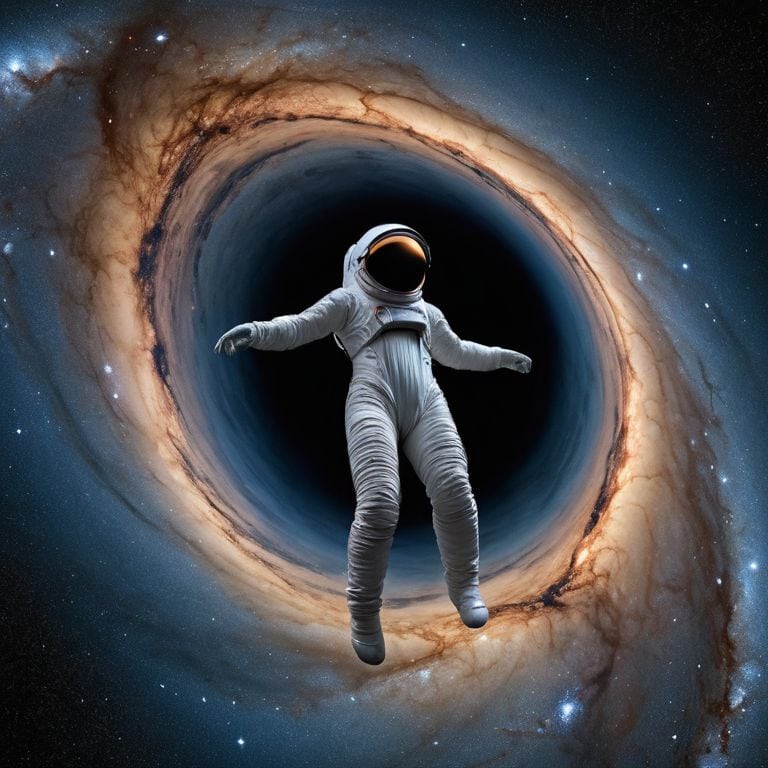
As I gaze up at the starry night sky, I often find myself pondering the age-old question: what would happen if you fell into a black hole? It’s a query that has sparked intense debate and speculation, with many theories and misconceptions floating around. I’ve lost count of how many times I’ve heard someone claim that falling into a black hole would be like entering a cosmic wonderland, where the laws of physics are but a distant memory. But let’s be real, folks – the reality is far more _fascinating_ and complex.
In this article, I promise to take you on a journey through the cosmic abyss, stripping away the hype and jargon to reveal the honest, _experience-based_ truth about black holes. As someone who’s spent years studying the mysteries of the universe, I’m excited to share my knowledge with you in a way that’s both _accessible_ and engaging. So, if you’re ready to embark on a voyage of discovery and explore the wonders of the cosmos, then join me as we delve into the unknown and uncover the secrets that lie within the heart of a black hole.
Table of Contents
Voyage Into the Void
As we embark on this voyage into the void, the sheer scale of a black hole’s gravity begins to warp our understanding of space and time. The effects of gravity on the human body would be nothing short of extraordinary, causing time dilation and gravitational stretching that would render our current physical form unrecognizable. This phenomenon, often referred to as spaghettification, is a theoretical model that attempts to explain the extreme gravitational forces at play near a black hole.
The black hole formation process is a complex dance of celestial mechanics, where the collapse of a massive star gives rise to an abyss of unimaginable density. As we approach the event horizon, the point of no return, our perception of reality would become increasingly distorted. Theoretical models of black hole behavior suggest that the gravitational pull would become so strong that not even light could escape, creating an illusion of frozen time for observers outside the horizon.
In the depths of a black hole, simulations of black hole environments reveal a realm where the laws of physics as we know them begin to break down. The cosmic implications of such an environment are still a topic of active research, with scientists using astronomical methods for detecting black holes to unravel the mysteries hidden within. As we continue to explore and understand these cosmic phenomena, we are reminded of the awe-inspiring complexity and beauty of the universe, waiting to be uncovered by curious minds and innovative science.
Effects of Gravity on Human Body
As we delve deeper into the abyss, the gravity’s impact on our physical form becomes a fascinating, yet unsettling topic. The intense gravitational forces would start to take their toll, causing our bodies to experience a phenomenon known as gravitational stretching.
Our molecular structure would begin to distort, leading to a breakdown of our cellular integrity, ultimately resulting in a rather grim fate.
Unraveling Black Hole Formation Process
As I delve into the mysteries of black holes, I find myself pondering the cosmic dance of gravity and space that leads to their formation. It’s a process that begins with the collapse of a massive star, its gravity so strong that it warps the fabric of spacetime around it.
The formation of a black hole is a testament to the universe’s ability to create singularities, points of infinite density where the laws of physics as we know them break down. This process is still not fully understood, but it’s believed to involve a massive amount of matter being compressed into an incredibly small space, creating an intense gravitational pull that nothing, not even light, can escape.
What Happens Falling Into a Black Hole
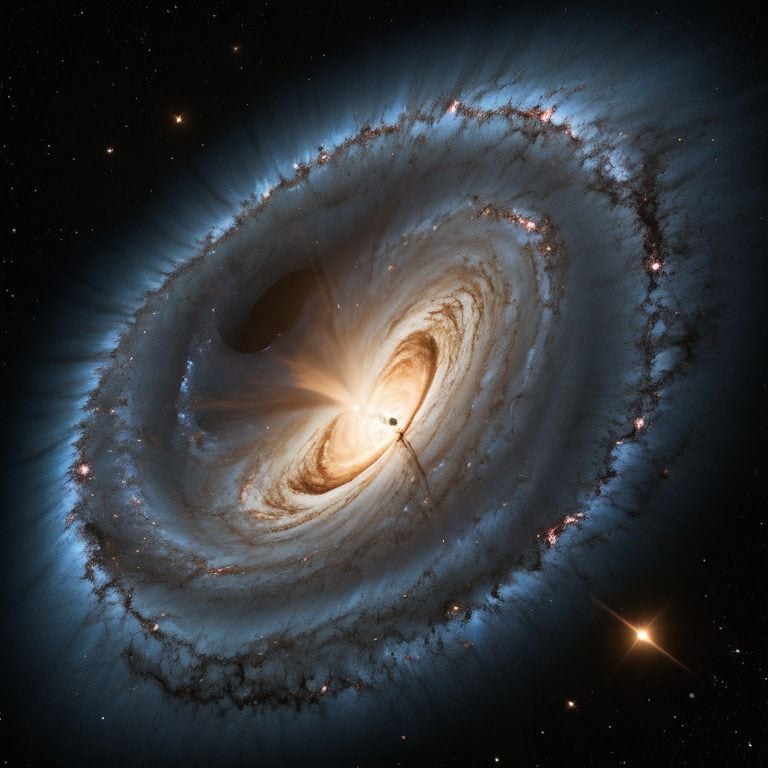
As we delve into the mystifying realm of black holes, it’s essential to understand the black hole formation process and its implications on our cosmic journey. The collapse of a massive star triggers a cataclysmic event, warping the fabric of spacetime and creating an abyss of unimaginable density. This phenomenon is closely tied to the effects of gravity on the human body, which would become increasingly pronounced as one approaches the event horizon.
The point of no return, the event horizon, marks the boundary beyond which anything that enters cannot escape. As we cross this threshold, the theoretical models of black hole behavior predict an intense gravitational pull, causing time dilation and stretching of space. This would result in a surreal experience, where time appears to slow down relative to the outside universe. The cosmic implications of black hole collisions also come into play, as the merger of two black holes can release an enormous amount of energy, reshaping the surrounding space.
In the heart of the black hole, the gravity is so intense that it would lead to spaghettification, a phenomenon where the gravitational force stretches and squeezes objects like putty. This is a consequence of the extreme gravity, which would ultimately lead to the breakdown of the human body at a molecular level. To better understand this phenomenon, scientists rely on simulations of black hole environments, which provide valuable insights into the behavior of matter in such extreme conditions.
Simulations of Cosmic Implications and Environments
As we delve into the mysteries of black holes, cosmic simulations play a crucial role in understanding the environments surrounding these voids. By recreating the conditions near a black hole, scientists can predict the behavior of matter and energy in such extreme environments.
The gravitational waves emitted by black holes have been a subject of intense study, allowing us to glimpse the unseen dance of gravity in the cosmos. These waves whisper secrets of the universe’s most violent events, offering a new window into the workings of spacetime itself.
Theoretical Models of Black Hole Behavior
As we delve into the mysteries of black holes, theoretical models become our guiding light, helping us understand the behavior of these cosmic phenomena. By studying the gravitational pull of black holes, scientists can simulate how matter and energy interact with them, providing valuable insights into their behavior.
Theoretical models also allow us to explore the information paradox, a longstanding puzzle in astrophysics that questions what happens to the information contained in matter that falls into a black hole. By examining quantum fluctuations, researchers can better comprehend the intricate dance between gravity, space, and time that occurs near these cosmic abysses.
Navigating the Cosmic Abyss: 5 Key Tips for the Theoretically Adventurous
- Approach with caution: the event horizon of a black hole marks the point of no return, where gravity is so strong not even light can escape, making it a boundary beyond which any escape is impossible
- Be prepared for spaghettification: the intense gravitational forces near a black hole would stretch and squeeze any object that dares to get too close, a phenomenon that highlights the extreme tidal forces at play
- Understand the role of singularity: at the heart of every black hole lies a singularity, a point of infinite density and zero volume, where the laws of physics as we know them cease to apply, adding to the mystique and terror of these cosmic entities
- Consider the information paradox: falling into a black hole raises fundamental questions about what happens to the information contained in the matter that crosses the event horizon, a puzzle that has intrigued physicists and cosmologists for decades
- Embrace the unknown: ultimately, the experience of falling into a black hole is a journey into the unknown, a venture into the most extreme conditions in the universe, where our current understanding of physics is pushed to its limits and beyond
Cosmic Insights: 3 Key Takeaways
Imagine taking a cosmic plunge into a black hole – the gravity is so insane, it would stretch and squeeze you like putty in a theoretical phenomenon known as spaghettification, isn’t that just mind-boggling?
The formation of black holes is a complex process involving massive stars and their explosive demise, leaving behind a void so dense not even light can escape, a true marvel of cosmic engineering
Falling into a black hole is like navigating through a cosmic labyrinth, where theoretical models and simulations converge to reveal the awe-inspiring dance of gravity, space, and time, a reminder of the universe’s infinite mysteries waiting to be unraveled
Beyond the Event Horizon
As we ponder the mystique of black holes, let’s consider this: falling into one would be less like an ending and more like a transformation, where the fabric of spacetime becomes the ultimate alchemist, transmuting our essence into a cosmic tapestry beyond our mortal comprehension.
Dr. Edward Woods
Beyond the Cosmic Horizon
As we conclude our journey into the abyss of a black hole, let’s summarize the mind-boggling effects it would have on us. From the formation process of these cosmic monsters to the spaghettification of objects that dare to cross their event horizon, we’ve unraveled the mysteries of gravity’s relentless grip. Our exploration of theoretical models and simulations has given us a glimpse into the cosmic implications of such a phenomenon, leaving us with a profound appreciation for the universe’s unfathomable power.
And so, as we gaze up at the starry night sky, let’s remember that the universe is full of endless wonders, waiting to be discovered and explored. The allure of the unknown, the thrill of the uncharted, and the beauty of the cosmos all beckon us to continue our pursuit of knowledge, to venture forth into the unknown, and to never stop wondering about the magic that lies just beyond our reach.
Frequently Asked Questions
What would be the visual experience as one approaches the event horizon of a black hole?
As you approach the event horizon, the point of no return, the visual experience becomes nothing short of surreal. The intense gravity warps space-time, creating a phenomenon known as gravitational lensing, where light from nearby stars is bent and distorted, like a cosmic funhouse mirror, offering a breathtakingly distorted view of the universe.
How would the intense gravitational forces affect the human mind and consciousness during the fall?
As the gravity warps space-time, our perception of reality would blur, like a star distorted by gravitational lensing. The intense forces would likely alter our brain’s functioning, potentially inducing hallucinations, disorientation, and a blurring of time and space, raising profound questions about the nature of consciousness in the face of cosmic extremes.
Would it be possible for any information or energy to escape from a black hole after an object has fallen in?
The eternal question of black hole escape artists! Unfortunately, according to Einstein’s theory of general relativity, nothing, not even light, can escape the gravitational clutches of a black hole once it’s crossed the event horizon – it’s a cosmic prison from which there’s no parole, a true abyss of spacetime.