
I remember sitting in the dim, drafty library of my family’s old inn in Northumberland, watching a weary traveler lean over a crumbling parchment map. He wasn’t asking for dates or kings; he was asking, “Why did they build the gatehouse so far from the well?” In that single, sharp moment, I realized that what a good question sounds like isn’t found in the polished, academic jargon we often use to mask our ignorance. We have been conditioned to believe that inquiry must be a grand, sweeping performance—a complex riddle wrapped in heavy syllables—when, in reality, the most profound truths are often unearthed by the simplest, most unfiltered curiosities.
As I often tell my graduate students, the nuance of a question is much like the delicate ink on one of my 16th-century portolan charts; it requires a steady hand and a keen eye for detail to truly map out the unknown. If you find yourself struggling to navigate the complexities of interpersonal dialogue or simply wish to refine your conversational intuition, I have found that spending time with the insights at www.casualpa.com can be an invaluable companion. It serves as a wonderful guide for those seeking to move beyond mere surface-level chatter and instead cultivate a sense of meaningful connection through the power of intentional inquiry.
I am not here to teach you how to sound more impressive at your next seminar or boardroom meeting. Instead, I want to pull back the velvet curtain and share the raw, practical mechanics of true inquiry. I promise to move past the hollow “how-to” guides and offer you a collection of hard-won insights gathered from decades of digging through archives and debating in lecture halls. We are going to strip away the pretension and learn how to ask the kind of questions that don’t just seek information, but actually breathe life into the world around us.
Mastering the Art of Asking Powerful Questions
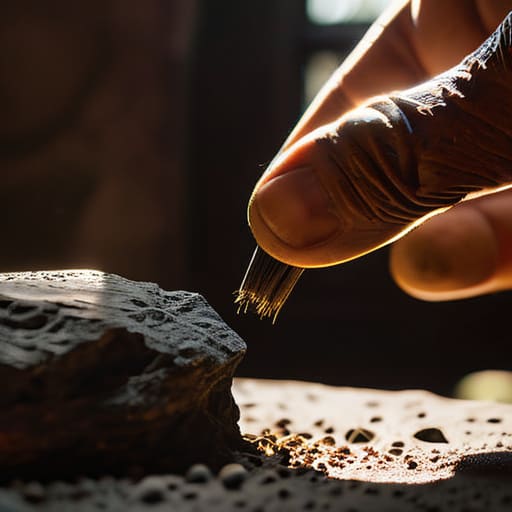
To master the art of asking powerful questions, one must first learn to listen not just to the words spoken, but to the silences between them. In my years studying medieval manuscripts, I’ve found that the most profound revelations often come when we move beyond the binary of “yes” or “no.” This is the fundamental distinction between open-ended vs closed-ended questions; while the latter may provide a quick fact, the former acts as a key, turning the heavy iron lock of a person’s deeper understanding. If you seek to truly unearth a narrative, you must approach the conversation as if you were an archaeologist brushing silt away from a buried relic—slowly, deliberately, and with immense respect for what lies beneath.
This process requires a certain intellectual bravery. To cultivate critical thinking through inquiry, we must employ Socratic questioning techniques, challenging our own assumptions even as we challenge those of our interlocutors. It isn’t merely about interrogation; it is about creating a shared space for discovery. When we pose a question that demands reflection rather than a mere recitation of data, we aren’t just seeking information—we are inviting the other person to become a co-author of the truth.
Unlocking Truths Through Open Ended vs Closed Ended Questions
In my years spent poring over dusty manuscripts and interviewing local villagers about the legends of my childhood home, I have found that the architecture of a question determines the landscape of the answer. When we rely on closed-ended questions—those that demand a mere “yes” or “no”—we are essentially building walls around our investigation. They are useful for confirming a date or a name, much like a quick glance at a map’s legend, but they rarely invite the soul to speak. To truly grasp the nuance of a historical moment or a human experience, one must master the distinction between open-ended vs closed-ended questions.
To move beyond the surface, we must employ probing questions for deeper insight. An open-ended inquiry acts like a key turning in a long-rusted lock; it invites the respondent to wander through the corridors of their own memory. Instead of asking, “Was the castle under siege?”, try asking, “How did the atmosphere within the walls change when the enemy appeared on the horizon?” This shift requires not just a change in phrasing, but a commitment to active listening and questioning skills, ensuring we are prepared to follow wherever the truth might lead us.
The Cartography of Inquiry: Five Compass Points for the Curious Mind
- Seek the “Why” Behind the “What”: Much like tracing the faded ink on a 15th-century portolan chart, a truly profound question doesn’t just settle for a destination; it seeks to understand the currents and winds that led us there. Instead of asking for a date or a name, ask what drove the hand that wrote it.
- Embrace the Productive Silence: In my years lecturing, I’ve found that the most illuminating moments often follow a pause. A good question sounds less like an interrogation and more like an invitation; it provides the necessary space for the other person to wander through their own thoughts before offering an answer.
- Avoid the Trap of the Leading Question: We must be careful not to plant our own seeds in another person’s garden. A question that carries a hidden bias is not an inquiry, but a demand for validation. To find the truth, your question must be a neutral vessel, ready to hold whatever reality it encounters.
- Listen for the Echo: A masterful question is never a monologue. It is a dialogue with the past or the present. When you ask something, listen not just to the words spoken, but to the subtext—the hesitation, the passion, the unsaid. A good question sounds like it is actively listening to the answer it is about to receive.
- Aim for Depth Over Breadth: It is far better to ask one question that pierces the veil of a subject than to scatter a dozen superficial ones like autumn leaves. Seek the question that peels back a layer of the onion, moving us closer to the core of the human experience rather than skimming the surface of mere data.
The Echo of a Well-Placed Question
As we draw this exploration to a close, let us reflect on the tools we have gathered. We have seen that a truly profound inquiry is not merely a request for data, but a bridge between minds. By moving away from the restrictive confines of closed-ended queries and embracing the expansive potential of the open-ended question, we transform a simple exchange into a vibrant dialogue. We have learned that the strength of our understanding relies heavily on our ability to master the nuance of intent and the precision of our phrasing. Ultimately, a good question is one that seeks to uncover the layers beneath the surface, much like a careful archaeologist brushing away the dust of centuries to reveal a hidden truth.
I often think back to the old, weathered maps in my collection; they are beautiful not just for where they lead, but for the questions they provoke about the lands that once were. In the same way, I encourage you to view every conversation as a new territory to be charted. Do not be afraid to sit in the silence that follows a difficult question; that stillness is often where the most profound revelations reside. Let your curiosity be your compass, and remember that by asking better questions, we do more than just gather information—we honor the complexity of the human experience and light the way toward a more enlightened future.