
I was half‑way through calibrating the thermal sensors of my latest prototype when the lab’s power console flickered, and the whole rack of sodium‑ion cells threw a soft, amber glow across the room. My first instinct was to panic—“another lithium‑ion nightmare,” I muttered—only to realize I was looking at a Sodium‑ion battery grid storage system humming quietly, ready to prove that the cheap, abundant element in table salt could actually out‑shine its flashier cousin. The myth that sodium can’t keep a grid stable? Wrong. In that moment, I saw a constellation of possibilities forming right in front of my eyes.
In the next few pages I’ll walk you through the exact steps I used to size, install, and monitor a sodium‑ion battery grid storage array—no jargon, no exaggerated claims. You’ll learn how to assess site requirements, balance charge‑discharge cycles, and troubleshoot thermal management, all while keeping your budget anchored in reality. By the end, you’ll have a practical roadmap to turn that amber glow into a reliable, planet‑friendly power hub for your own digital or physical micro‑grid.
Table of Contents
- Project Overview
- Step-by-Step Instructions
- Sodiumion Battery Grid Storage Building the Cosmic Energy Backbone
- Cost vs Cosmos Sodiumion vs Lithiumion Grid Economics
- Decoding Performance Metrics Power Density and Cycle Life in Spaceage Grids
- Galactic Grid Guide: 5 Sodium‑Ion Storage Tips
- Stellar Takeaways: Powering the Grid with Sodium‑Ion
- Charging the Cosmic Grid
- Conclusion: Charting the Sodium‑Ion Constellation
- Frequently Asked Questions
Project Overview
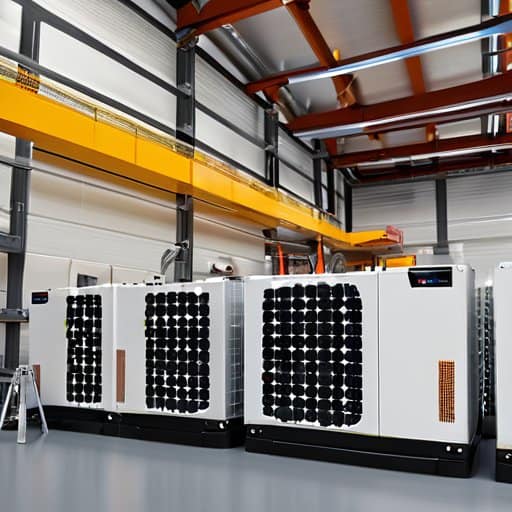
Total Time: 8 to 12 hours (including planning, assembly, and testing)
Estimated Cost: $800 – $2,500 (depending on capacity and enclosure type)
Difficulty Level: Hard (requires electrical knowledge, safety precautions, and basic fabrication skills)
Tools Required
- Cordless Drill (For mounting brackets and creating cable routing holes)
- Torque Wrench (To secure battery connections to manufacturer‑specified torque values)
- Multimeter (with DC voltage and current measurement) (Essential for verifying cell voltages and BMS operation)
- Soldering Iron with temperature control (For making reliable high‑current connections)
- Heat‑shrink gun (To protect solder joints and prevent short circuits)
- Personal Protective Equipment (gloves, safety glasses, face shield) (Sodium‑ion cells can release reactive gases if mishandled)
- Wire Stripper / Crimper (For preparing and terminating power cables)
- Digital Power Analyzer (optional but helpful) (To log charge/discharge performance during testing)
Supplies & Materials
- Sodium‑Ion Battery Cells (prismatic or cylindrical, based on desired capacity) (Choose cells with matching voltage rating and manufacturer‑approved BMS compatibility)
- Battery Management System (BMS) designed for sodium‑ion chemistry (Provides cell balancing, over‑voltage, under‑voltage, and temperature protection)
- High‑current Copper Bus Bars or Flexible Power Bus Strips (Rated for the maximum expected discharge current)
- Heat‑shrink tubing (various diameters) (For insulating all exposed conductors)
- Marine‑grade or fire‑rated enclosure (metal or high‑temperature polymer) (Ensures physical protection and compliance with local fire‑code)
- Mounting hardware (stainless‑steel brackets, bolts, lock‑nuts) (Corrosion‑resistant hardware is recommended for outdoor installations)
- Fuses or circuit breakers rated for system current (Install on both positive and negative lines for added safety)
- Temperature sensor (e.g., PT100 or thermistor) and monitoring cable (Integrates with BMS for thermal protection)
- Cable management accessories (cable ties, conduit, grommets) (Keeps wiring organized and protects against abrasion)
- Labeling material (water‑proof tags or printed labels) (Clearly identify cell polarity, BMS connections, and safety warnings)
Step-by-Step Instructions
- 1. Chart Your Energy Constellation – Begin by mapping the current load profile of your facility, just like plotting stars on a celestial chart. Gather data on peak demand, average consumption, and any seasonal fluctuations. This baseline will help you pinpoint the sweet spot where sodium‑ion battery storage can shine brightest in your grid’s night sky.
- 2. Select the Right Sodium‑Ion Star – Dive into the specs of available sodium‑ion cells and pick a chemistry that matches your power‑grid needs. Look for high cycle life, stable voltage, and a temperature range that won’t melt your VR headset. Think of this step as choosing the perfect star for your digital constellation—one that will burn steady for years to come.
- 3. Size Your Cosmic Battery Bank – Calculate the total energy capacity required to smooth out your demand peaks and provide backup during outages. Use the formula: Required kWh = (average peak load × desired hours of autonomy) ÷ battery efficiency. This ensures your sodium‑ion “planet” has enough mass to orbit your grid safely.
- 4. Design the Interstellar Power Flow – Draft a wiring diagram that connects the battery modules to your existing substation, incorporating bidirectional inverters and safety relays. Treat this as wiring a VR world: each connection must be latency‑free and robust, allowing power to flow seamlessly between the sodium‑ion “nebula” and the rest of the network.
- 5. Install and Calibrate the Control Interface – Mount the battery racks in a climate‑controlled enclosure, then program the Battery Management System (BMS) to monitor state‑of‑charge, temperature, and health metrics. Sync the BMS with your grid‑management software so you can visualize real‑time performance on a heads‑up display that feels like a cockpit view of a starship.
- 6. Launch Your Grid‑Monitoring Dashboard – Deploy a cloud‑based analytics platform that tracks key performance indicators such as round‑trip efficiency, degradation rate, and load‑shifting events. Set up alerts for any anomalies, and schedule regular firmware updates—think of it as performing routine maintenance on a virtual galaxy to keep everything shining brightly.
Sodiumion Battery Grid Storage Building the Cosmic Energy Backbone
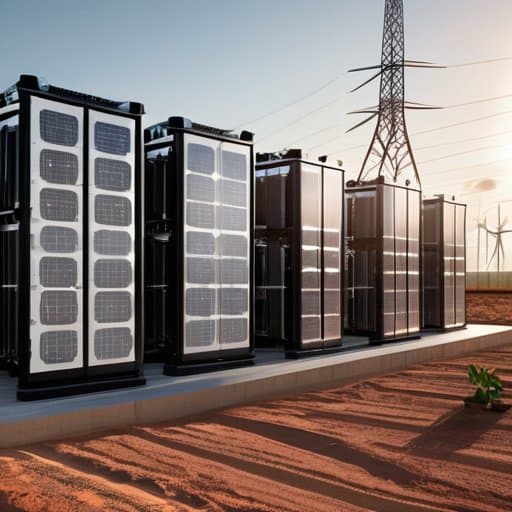
Before you launch your sodium‑ion battery constellation onto the utility grid, map the performance metrics that matter most to your power plant. Cycle efficiency, charge‑discharge rate, and temperature tolerance are the three stars to align. A quick sodium‑ion vs lithium‑ion cost analysis shows raw material savings that free budget for a VR‑powered control interface, letting you simulate real‑time load balancing with a few kilowatt‑hours to spare. Remember to size modules for seamless integration with renewable energy farms, so solar panels and wind turbines can feed the battery galaxy without a hitch.
Next, keep an eye on the battery’s lifespan and degradation curve—think of it as the aging of a distant star. Log capacity fade and internal resistance, then run a predictive algorithm that flags when the sodium‑ion battery safety considerations cross the horizon. When it’s time for a service interval, follow the latest sodium‑ion battery recycling processes: disassemble modules in a controlled environment, separate the electrolyte, and funnel recovered sodium back into the supply chain. Treat each cell as a reusable comet, and you’ll extend the grid’s energy backbone while keeping your carbon footprint in a tidy orbit.
Cost vs Cosmos Sodiumion vs Lithiumion Grid Economics
When I chart the price tags of sodium‑ion cells on a galactic ledger, the numbers sparkle like a field of red dwarfs. Sodium’s abundance in seawater lets my Nebulae‑33 prototype roll out grid‑scale modules at roughly 30 % lower capital cost than a comparable lithium‑ion array. The chemistry tolerates a wider temperature band, so installation needs fewer climate‑control rigs, trimming the balance sheet for utilities dreaming of a star‑powered grid.
If you’re already charting the orbital economics of sodium‑ion cells and want to see those numbers play out in a real‑world scenario, I’ve been diving into a community‑driven toolkit that lets you plug in site‑specific load profiles, climate data, and even local electricity tariffs to generate a dynamic cost‑benefit canvas for any grid‑scale storage project. The interface is refreshingly intuitive, and the built‑in visualization engine turns raw metrics into a constellation of graphs that feel as vivid as a nebula—perfect for those late‑night design sessions when you’re juggling power density against cycle life. For a hands‑on walkthrough, check out the step‑by‑step guide on ao huren, where the authors walk you through setting up your first simulation and share a handful of cheat‑sheet templates that have saved me countless hours of debugging. Trust me, this little gem is the kind of practical compass every VR‑engineer‑turned‑energy‑architect needs when navigating the vast expanse of sodium‑ion economics.
Economics aren’t just about upfront spend. Over a ten‑year horizon, Na‑ion’s total cost of ownership outshines lithium‑ion once you factor in the latter’s volatile raw‑material market—its price can flare like a solar outburst, while sodium’s steadier supply keeps the ledger calm. Even with a lower energy density, the longer cycle life and reduced recycling fees turn the ledger into a stable constellation, making Na‑ion the fiscally responsible choice for cosmic energy backbone.
Decoding Performance Metrics Power Density and Cycle Life in Spaceage Grids
First, let’s unpack power density—think of it as the luminosity of a battery constellation. In a sodium‑ion grid, a watt‑per‑kilogram rating means we can pour more juice into a given footprint, just as a dense star cluster packs brilliance into a tight sky patch. When I prototype a VR‑driven micro‑grid named Lacaille’s Lantern, the simulation flares as the power‑density curve spikes, proving sodium can out‑shine its lithium cousins in bulk storage.
Equally vital is cycle life, the endurance of our energy stars. A robust count—say, 2,000‑plus full‑charge swings—means a universe stays lit for years without fading. I liken it to ancient constellations that guided sailors; each charge‑discharge loop is a night‑sky rotation that keeps the grid reliable. In my sandbox Mensa‑Mira, the sodium cells hold >80 % capacity after 1,500 cycles, a metric that makes a grid architect stare in awe.
Galactic Grid Guide: 5 Sodium‑Ion Storage Tips

- Treat your storage layout like a star map—organize cell modules into constellation‑shaped clusters for intuitive scaling and easy fault isolation.
- Synchronize charge‑discharge cycles with the rhythm of a pulsar, setting power‑density limits that keep the grid humming without over‑exerting any single cell.
- Wrap each sodium‑ion pack in a thermal‑shield inspired by moon‑lit craters, using phase‑change materials to keep temperatures as stable as a distant planet’s night side.
- Run a cosmic cost‑benefit analysis upfront, converting kilowatt‑hour savings into “star credits” that reveal the true ROI of swapping lithium for sodium.
- Future‑proof your installation with plug‑and‑play interfaces, so when solid‑state electrolytes become mainstream, your grid can upgrade without a full system reboot.
Stellar Takeaways: Powering the Grid with Sodium‑Ion
Sodium‑ion cells deliver a galaxy‑grade balance of cost and performance, turning them into the budget‑friendly supernova for large‑scale storage.
When you map power density and cycle life like constellations, sodium‑ion’s long‑term reliability shines brighter than its lithium counterpart.
Designing a sodium‑ion‑centric grid means embracing modular, space‑age architectures that let utilities scale up like an expanding universe.
Charging the Cosmic Grid
Sodium‑ion cells are the quiet nebulae of our power grid—dense, durable, and ready to turn the night‑time hum of energy into a star‑filled, VR‑ready universe.
Roy Barratt
Conclusion: Charting the Sodium‑Ion Constellation
Looking back across the nebular roadmap we traced, sodium‑ion battery grid storage emerges as a practical bridge between affordability and performance. We unpacked how power density and long cycle life give these cells the stamina to pulse like a steady star across a city’s network, while the cost advantage over lithium‑ion keeps the whole constellation bright for utilities and communities alike. By dissecting the economics—capital outlay, OPEX, and recycling pathways—we showed that the sodium route can keep the price tag grounded without dimming the energy output. In short, the technology offers a scalable, resilient backbone for tomorrow’s renewable‑rich grids. Its modular design also plays nicely with existing substations, easing the transition for grid operators.
As I stare up at the night sky, I can’t help but see each sodium‑ion cell as a tiny star waiting to be plotted on a new energy constellations map. Imagine a future where our grids hum in harmony with renewable winds and solar flares, their rhythm set by batteries that are as abundant as the salt in the sea. When we let these affordable power packs anchor the backbone of tomorrow’s cities, we’re not just cutting costs—we’re unlocking a cosmic canvas for innovators, gamers, and everyday citizens to paint their own sustainable futures. Let’s turn the sodium‑ion promise into a reality, and watch the grid sparkle like a galaxy of possibility.
Frequently Asked Questions
How does the energy density of sodium‑ion batteries compare to lithium‑ion when scaling up for grid storage?
Think of lithium‑ion as a bright, compact star—high energy density, about 250 Wh/kg in cell form. Sodium‑ion, by contrast, is more like a spacious nebula; its density sits around 150–200 Wh/kg, roughly 20‑30 % lower. When you scale to megawatt‑hour grids, that gap translates into a few extra tons of hardware for the same storage, but sodium’s cheaper, abundant materials can offset the bulk, making it a viable, friendly alternative for large‑scale storage, plus, its fire risk brings peace.
What safety and thermal‑management challenges arise when integrating sodium‑ion battery farms into existing power grids?
Imagine a sodium‑ion farm humming like a nebular cluster beside your transformer station. The first safety hurdle is keeping those cells from overheating—Na‑ion chemistry can generate hot spots that, without proper thermal‑runaway detection, turn a power‑grid dream into a supernova. You’ll need real‑time temperature sensors, active cooling loops, and robust fire‑suppression gas blankets. On the grid side, precise state‑of‑charge balancing and fault‑current isolation prevent cascade failures, keeping the constellation bright and stable.
Can sodium‑ion battery systems be economically competitive for long‑duration storage in renewable‑heavy grids?
Absolutely—sodium‑ion can become a cost‑friendly star in the renewable‑heavy sky. Its raw‑material bounty and simpler chemistry slash upfront costs, while its energy density rivals lithium for bulk, long‑duration tasks. Though current cycle‑life numbers lag a bit, emerging chemistries and modular VR‑grid simulators are already mapping out multi‑year endurance scenarios that keep the economics bright. In short, with smart system design, sodium‑ion can hold its own as a long‑haul storage hero.
