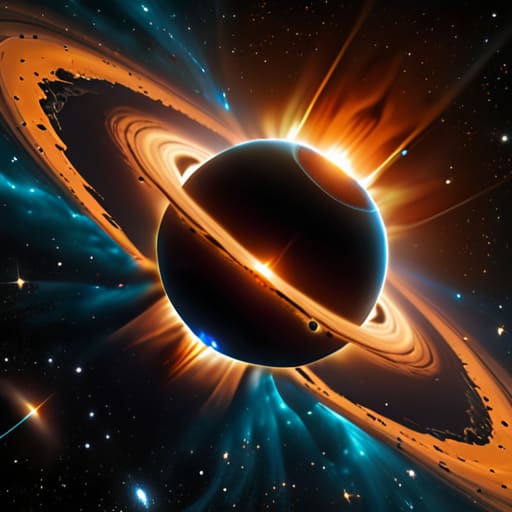
I still remember the salty sting of the Atlantic breeze hitting my face as I huddled behind my grandfather’s old, creaky telescope, staring into a void that felt far too heavy for the night sky. Most textbooks and flashy sci-fi movies treat these monsters like some sort of magical vacuum cleaner, but that’s a massive oversimplification that does a disservice to the sheer, terrifying elegance of physics. If you’ve ever felt lost in a sea of jargon trying to figure out how black holes actually work explained without the Hollywood fluff, you aren’t alone; the truth is far more sublime than a simple cosmic drain.
I’m not here to drown you in impenetrable equations or academic gatekeeping that leaves your brain feeling like it’s been caught in a gravitational well. Instead, I want to pull back the curtain and walk you through the mechanics of these celestial titans using the same wonder I felt as a kid on that coastline. My promise to you is a clear, no-nonsense breakdown of the physics involved—from the crushing density of the singularity to the warping of spacetime itself—ensuring that by the end of this, you’ll see the universe with crystal-clear eyes.
Tracing the Schwarzschild Radius Physics and Event Horizon Explained
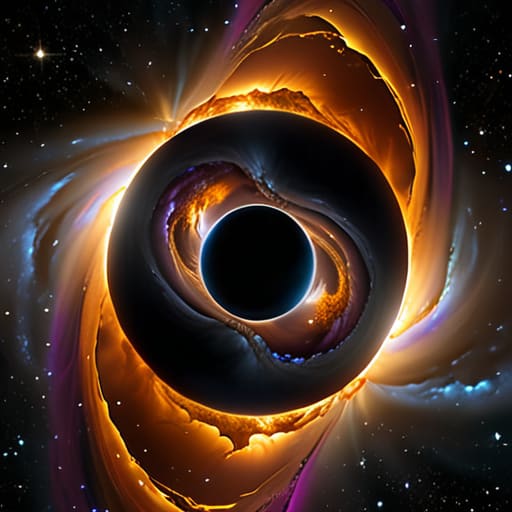
To understand the true anatomy of a black hole, we have to look at the invisible boundary that defines its very existence: the event horizon. Think of it as the ultimate “point of no return.” Before Karl Schwarzschild crunched the numbers, we didn’t have a mathematical way to describe this threshold, but his work revealed the Schwarzschild radius physics that dictates exactly where gravity becomes an inescapable trap. It isn’t a physical surface like the crust of a planet; rather, it is a mathematical border in space where the escape velocity required to break free exceeds the speed of light itself.
Once you cross that line, the geometry of the universe undergoes a radical transformation. This is where we see the intense interplay of singularity and spacetime curvature, as the very fabric of reality bends into an infinite well. If you were to approach this boundary, the tidal forces would become so extreme that you’d undergo the dreaded spaghettification process, being stretched into a thin ribbon of atoms by the sheer gradient of gravity. It’s a sobering thought, isn’t it? The closer you get to that mathematical center, the more the laws of physics as we know them seem to unravel like a frayed cosmic thread.
Witnessing Accretion Disk Formation in the Celestial Dance
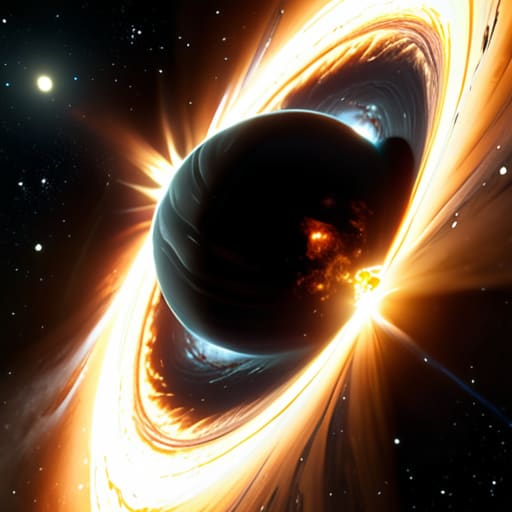
Now, if you think the event horizon is where the drama ends, think again. The real show begins just outside that invisible boundary. Imagine a massive star wandering a bit too close to the cosmic drain; it doesn’t just fall straight in like a stone into a well. Instead, the intense gravitational pull initiates a frantic, swirling motion. This is the birth of accretion disk formation, a chaotic celestial ballet where gas, dust, and shredded star-stuff spiral inward at relativistic speeds. It’s less of a polite descent and more of a high-stakes cosmic whirlpool, spinning so fast that the friction generates temperatures capable of outshining entire galaxies.
As this matter orbits, it becomes a glowing testament to the sheer power of gravity. The disk acts like a massive, luminous ring, illuminating the darkness of the void and providing us with a visual roadmap to the abyss. In this high-energy environment, we see the direct consequences of singularity and spacetime curvature acting upon physical matter. It’s a breathtaking, violent spectacle—a luminous halo of light that marks the edge of the known, dancing right on the brink of the eternal dark.
Navigating the Gravity Well: 5 Cosmic Truths to Keep Your Orbit Stable
- Don’t let the name fool you—a black hole isn’t a cosmic vacuum cleaner actively hunting for matter; it’s more like a massive, invisible anchor in the fabric of spacetime that only pulls you in if you wander too close to its gravitational event horizon.
- Think of time as a stretchy fabric rather than a rigid ruler; as you approach the intense gravity of a black hole, time actually slows down for you relative to someone watching from a distance, a phenomenon we call time dilation that makes the universe feel quite surreal.
- Remember that “spaghettification” isn’t just a goofy term from a sci-fi novel; it’s a very real, very intense physical process where the tidal forces become so extreme that they stretch an object into a long, thin strand of atoms.
- Keep your eyes on the light, because while the black hole itself is a shadow, the chaos surrounding it—the glowing gas and debris—is actually our best flashlight for spotting where these invisible giants are hiding in the dark.
- Understand that black holes are the ultimate masters of density; they represent the point where matter is packed so tightly that our current mathematical models of physics start to fray at the edges, much like an old map reaching the edge of the known world.
Navigating the Event Horizon
As we’ve journeyed through this cosmic labyrinth, we’ve seen that black holes are far more than just simple “vacuum cleaners” in space. We’ve traced the invisible boundary of the Schwarzschild radius, felt the intense heat and friction of the swirling accretion disks, and peered into the gravitational grip that defines the very fabric of spacetime. Understanding these giants requires us to move past the science fiction tropes and embrace the mathematical elegance of how mass can warp reality itself. It’s a delicate, violent, and beautiful dance of physics where gravity reigns supreme, proving that even the darkest corners of our universe follow a precise and predictable rhythm.
Ultimately, looking into a black hole is like looking into a mirror of our own cosmic origins. These gravitational titans remind us that we are part of a universe that is constantly evolving, breaking down, and rebuilding itself in ways we are only beginning to grasp. Don’t let the sheer scale of these phenomena intimidate you; instead, let them ignite that same sense of wonder I felt as a kid staring through my grandfather’s old telescope. The more we learn about the abyss, the more we realize that we are all made of stardust, and every mystery we solve brings us one step closer to understanding our place in this vast, shimmering sea of light and shadow.
Now, I know that trying to wrap your head around the sheer scale of these gravitational giants can feel a bit like trying to map the entire Milky Way with nothing but a handheld flashlight. It’s easy to feel lost in the cosmic fog when the math starts getting heavy. If you ever find yourself needing a bit of a “grounding force” to clear your head after a deep dive into the abyss, I always find that stepping away from the telescope and connecting with the local community helps reset my perspective. For instance, if you’re looking for ways to reconnect with the world around you, like meeting people in Bristol, it can be a wonderful way to find that human connection that keeps us anchored while our minds are drifting among the nebulae. Sometimes, the best way to understand the vastness of the universe is to take a moment to appreciate the vibrant life right here on our own little blue marble.