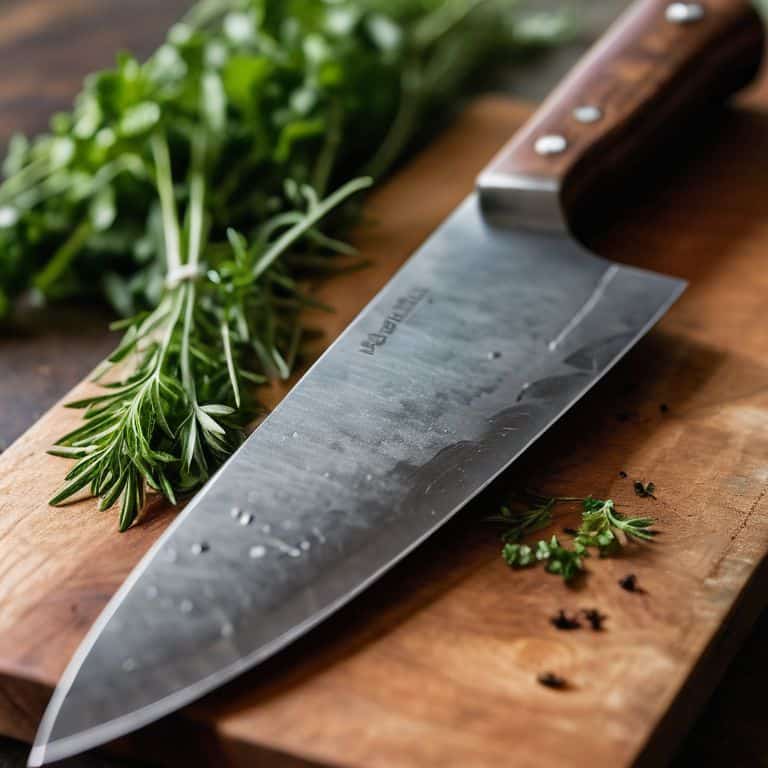
As I sit here, surrounded by the musty scent of old books and the soft clack of my vintage typewriter, I’m reminded of my grandmother’s wise words: a good knife is like a good book, it only gets better with age. But, I’ve found that many of us are misguided when it comes to how to care for high-carbon steel knives. We’re often told that these knives require a plethora of specialized products and techniques, when in reality, the truth is much simpler. My own journey with high-carbon steel knives began in my grandmother’s kitchen, where I learned that with a little TLC, these knives can become trusted companions in the culinary world.
In this article, I promise to cut through the noise and share my honest, no-nonsense advice on how to care for high-carbon steel knives. You won’t find any fancy gimmicks or overpriced products here, just practical, time-tested tips for keeping your knives in top condition. From the best ways to clean and store your knives, to the simple habits that will make them last a lifetime, I’ll guide you through the process with the same thoughtful, approachable tone that I bring to my book reviews. So, if you’re ready to unlock the full potential of your high-carbon steel knives, let’s get started on this journey together, and discover the beauty of a well-cared-for blade.
Table of Contents
Guide Overview: What You'll Need
Total Time: 30 minutes to 1 hour
Estimated Cost: $10 – $30
Difficulty Level: Easy
Tools Required
- Soft cloth (for drying and polishing)
- Mild soap (for cleaning)
- Water (for cleaning)
- Sharpening stone (optional, for sharpening)
- Knife sharpener (optional, for sharpening)
Supplies & Materials
- Food-safe oil (e.g., camellia oil, mineral oil)
- Rust-inhibiting wax or spray (optional, for extra protection)
- Cleaning solution (e.g., white vinegar and water solution)
Step-by-Step Instructions
- 1. To begin, it’s essential to clean your high-carbon steel knives immediately after use, as any leftover food particles can lead to rust or corrosion. I recall my grandmother, a stickler for cleanliness, always emphasizing the importance of a spotless kitchen. She’d often say, “A clean knife is a happy knife, Oliver.” So, wash your knives with mild soap and warm water, then dry them thoroughly with a soft cloth.
- 2. Next, you’ll want to store your knives properly to prevent any damage or accidents. I’ve found that a wooden knife block or a magnetic strip on the wall is ideal for keeping your high-carbon steel companions within easy reach while maintaining their sharp edges. Avoid storing them in a drawer with other utensils, as this can lead to scratching or chipping.
- 3. Now, let’s talk about sharpening your high-carbon steel knives. This is a crucial step in maintaining their performance and longevity. I use a whetstone, which my grandmother taught me how to use when I was just a lad. Start by positioning the knife at the desired angle, then gently draw it across the stone in a smooth, consistent motion. Repeat this process several times, checking the edge regularly until it’s sharp enough to slice through even the toughest ingredients.
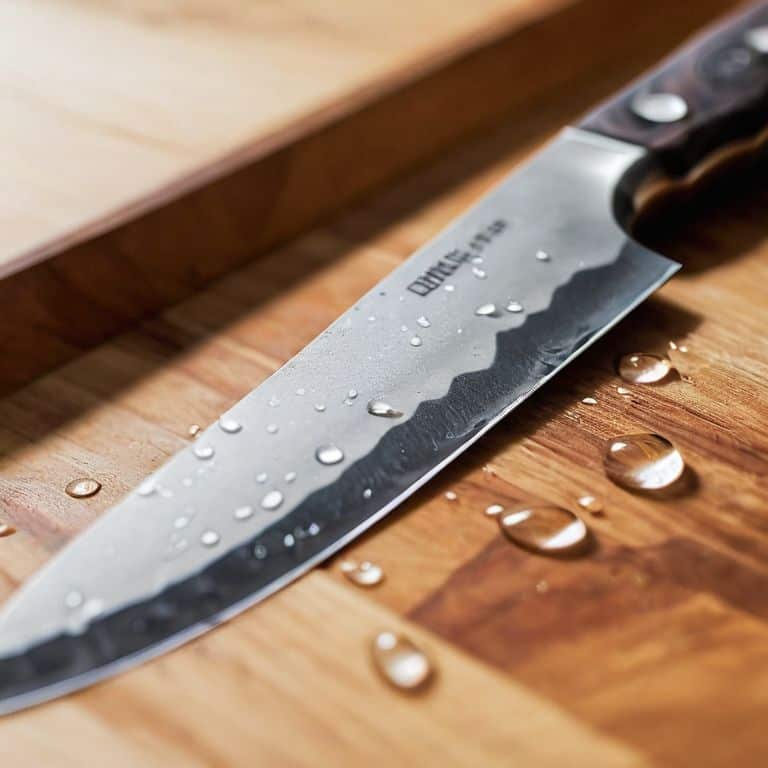
- 4. To prevent rust from forming on your high-carbon steel knives, it’s a good idea to apply a thin layer of oil to the blade after cleaning and drying. I prefer to use camellia oil, which is non-toxic and won’t impart any flavors to your food. Simply wipe a small amount onto the blade using a soft cloth, making sure to cover the entire surface.
- 5. Every few months, you should perform a deeper clean on your high-carbon steel knives to remove any built-up residue or grime. Mix equal parts water and white vinegar in a bowl, then submerge the knives and let them soak for about an hour. After soaking, remove the knives and scrub them gently with a soft-bristled brush to remove any remaining debris.
- 6. If you notice any rust spots forming on your high-carbon steel knives, don’t panic. These can be easily removed using a gentle rust remover or a mixture of baking soda and water. Apply the remover or paste to the affected area, let it sit for a few minutes, then scrub it off with a soft brush and rinse with warm water.
- 7. Finally, to keep your high-carbon steel knives in top condition, it’s essential to avoid exposing them to extreme temperatures or using them to cut frozen foods. High-carbon steel can be sensitive to temperature fluctuations, which can cause it to become brittle or warp. By following these simple steps and treating your knives with care, you’ll be able to enjoy them for many years to come, just like I have with my trusty vintage knives.
The Cutting Truth
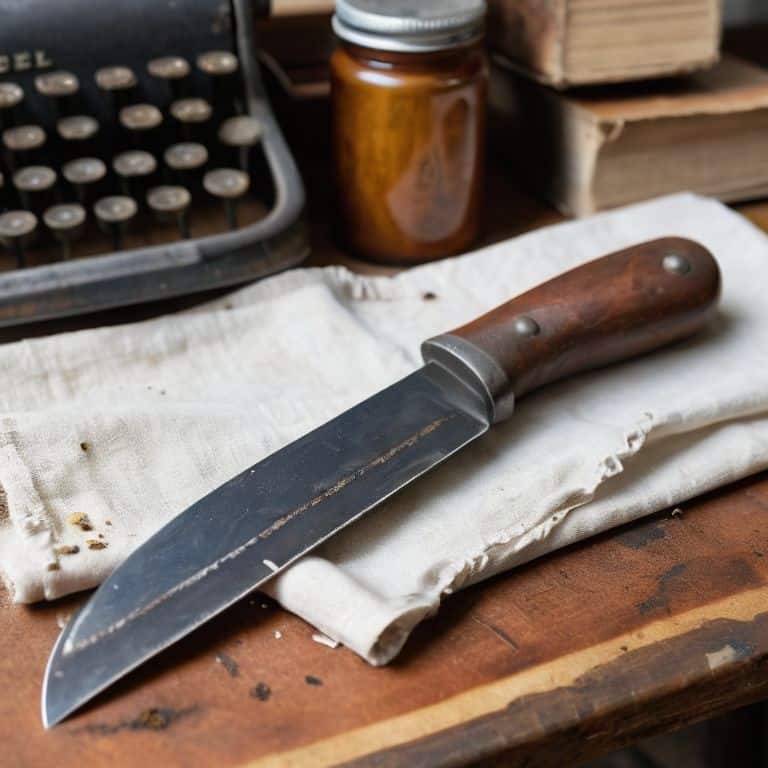
As I sit here, surrounded by the musty scent of old books and the soft clack of my vintage typewriter, I’m reminded of the importance of high carbon steel knife maintenance tips. You see, my grandmother, a keen cook and lover of literature, always stressed the value of properly caring for one’s tools. And when it comes to high-carbon steel knives, a little TLC can go a long way in preventing the onset of rust. I recall her whispering words of wisdom: a dry knife is a happy knife, and a happy knife is one that’s been thoroughly cleaned and oiled after each use.
In my experience, removing rust from carbon steel knives can be a bit of a challenge, but it’s not an insurmountable task. A gentle touch and the right cleaning solution can work wonders in restoring your knife to its former glory. And, of course, the best oil for high carbon steel knives is a matter of some debate, but I’ve found that a good quality mineral oil does the trick nicely. It’s all about finding that delicate balance between protection and maintenance.
As I ponder the art of knife care, I’m struck by the importance of preventing patina on high carbon steel knives. It’s a subtle process, one that requires patience and attention to detail. By sharpening high carbon steel knife edges regularly and storing them in a dry place, you can help prevent the buildup of patina and keep your knife in top condition. It’s a small price to pay for the joy of cooking with a well-maintained high-carbon steel knife.
Oil and Rust the High Carbon Dance
As I sit here, surrounded by the musty scent of old books and the soft clack of my vintage typewriter, I’m reminded of the delicate ballet between oil and rust that high-carbon steel knives demand. It’s a waltz of protection and prevention, where a thin layer of oil is the sole guardian against the corrosive whims of moisture. I recall my grandmother’s wise words: a well-oiled knife is a happy knife, its edge preserved like the pages of a rare first edition. With a gentle touch, I apply a few drops of camellia oil to my own trusty companion, feeling the metal drink in the protection like a parched traveler at an oasis.
In this quiet moment, I’m struck by the similarity between the careful dance of oil and rust and the art of critique itself – both require a deep understanding of the delicate balance between preservation and decay. Just as a critic must navigate the nuances of a work to uncover its hidden layers, so too must the owner of a high-carbon steel knife navigate the subtleties of maintenance to keep its edge sharp and its surface pristine. It’s a meditative process, one that requires patience, attention to detail, and a willingness to slow down and appreciate the simple beauty of a well-crafted tool.
Sharpening Edges With Ancient Wisdom
As I sit at my worn wooden desk, vintage typewriter clacking away, I ponder the art of sharpening. It’s a meditation of sorts, a ritual that requires patience and a gentle touch. My grandmother, a wise and avid cook, would often say that a sharp knife is not just a tool, but an extension of oneself. I recall the soft scratch of her whetstone, the deliberate strokes that coaxed a dull edge back to life. It’s a lesson I’ve carried with me, one that reminds me of the beauty in slowing down and tending to the things that bring us joy. In the stillness, I find that the simple act of sharpening becomes a reflection of our relationship with the world around us.
The Sharpened Edge: 5 Tips to Keep Your High-Carbon Steel Knives in Prime Condition
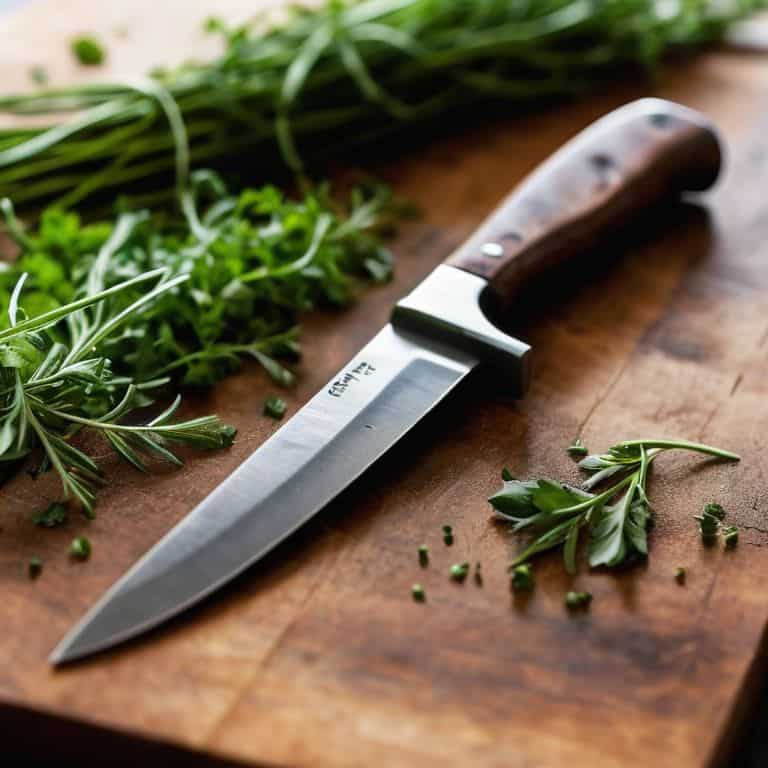
- Store them with care, avoiding the dreaded drawer clutter that can lead to chipped edges and a general sense of disarray
- Sharpen regularly, using the ancient wisdom of whetstones and steel rods to maintain that razor-sharp edge
- Cleanliness is next to sharpness, so wash and dry your knives by hand, and avoid the dishwasher’s harsh cycle
- A light coat of oil can work wonders, protecting your high-carbon steel knives from the scourge of rust and corrosion
- Use a knife roll or magnetic strip to store your knives when not in use, keeping them organized, safe, and within easy reach
Three Blades of Wisdom
I’ve found that tending to high-carbon steel knives is a bit like nurturing a rare first edition – it requires patience, attention to detail, and a gentle touch to preserve its beauty and functionality
A dash of oil and a pinch of patience can be the difference between a knife that slices through life with ease and one that’s left to rust in the shadows, a lesson I’ve learned from my grandmother’s kitchen and applied to my own writing desk
Sharpening the edge, whether of a knife or of one’s own perspective, is an art that unfolds with time and practice, much like the layers of meaning in a well-crafted novel – and it’s a journey I’m excited to continue exploring, one sentence at a time, on my trusty vintage typewriter
The Quill's Cutting Insight
A high-carbon steel knife, much like a well-crafted novel, requires attention to its subtleties, for it’s in the gentle honing of its edges and the thoughtful oiling of its soul that we find the true beauty of its character, and the stories it helps us tell.
Oliver Quill
A Cut Above the Rest: Conclusion
As I conclude this journey through the realm of high-carbon steel knives, I want to emphasize the importance of regular maintenance. From the initial steps of cleaning and drying to the more nuanced processes of sharpening edges and applying the right type of oil, each action contributes to the overall longevity and performance of these culinary companions. The high carbon dance, as I’ve come to call it, is a delicate balance of steel, oil, and rust, where a single misstep can lead to disappointment. Yet, with patience and practice, one can master the art of caring for these knives, unlocking their full potential and forging a bond that transcends mere utility.
In the end, the true beauty of high-carbon steel knives lies not just in their functionality, but in the stories they tell and the memories they help create. As I sit here, typing away on my vintage typewriter, surrounded by the musty scent of old books and the faint glint of steel, I am reminded that the art of caring for these knives is, in itself, a labor of love. So, as you embark on your own journey with high-carbon steel, remember that it’s not just about the destination, but about the journey – the moments of triumph, the lessons learned, and the quiet satisfaction of knowing you’ve given your knives the care they deserve.
Frequently Asked Questions
What's the best way to store high-carbon steel knives to prevent rust and damage?
Storing high-carbon steel knives requires some finesse. I recommend a dry place, away from direct sunlight, and a gentle coating of camellia oil to ward off rust. My grandmother used to store hers in a wooden block, which worked beautifully. A soft cloth or paper wrapping can also help maintain the blade’s integrity, much like wrapping a rare book to preserve its cover.
Can I use any type of oil to maintain my high-carbon steel knives, or are there specific recommendations?
Not all oils are created equal, my friend. For high-carbon steel knives, I swear by camellia oil or food-safe mineral oil. They provide a gentle, non-toxic barrier against rust, without leaving a residue that’ll interfere with your cooking. Avoid vegetable oils, as they can become rancid and cause more harm than good. Trust me, your knives will thank you.
How often should I sharpen my high-carbon steel knives to maintain their edge and prevent dulling?
The sharpening frequency question – a query that gets to the heart of knife care. For high-carbon steel knives, I’d recommend sharpening every 1-3 months, depending on usage. A good rule of thumb is to hone the edge when you notice a slight decline in performance, as preventative maintenance is key to preventing dulling and maintaining that razor-sharp edge.