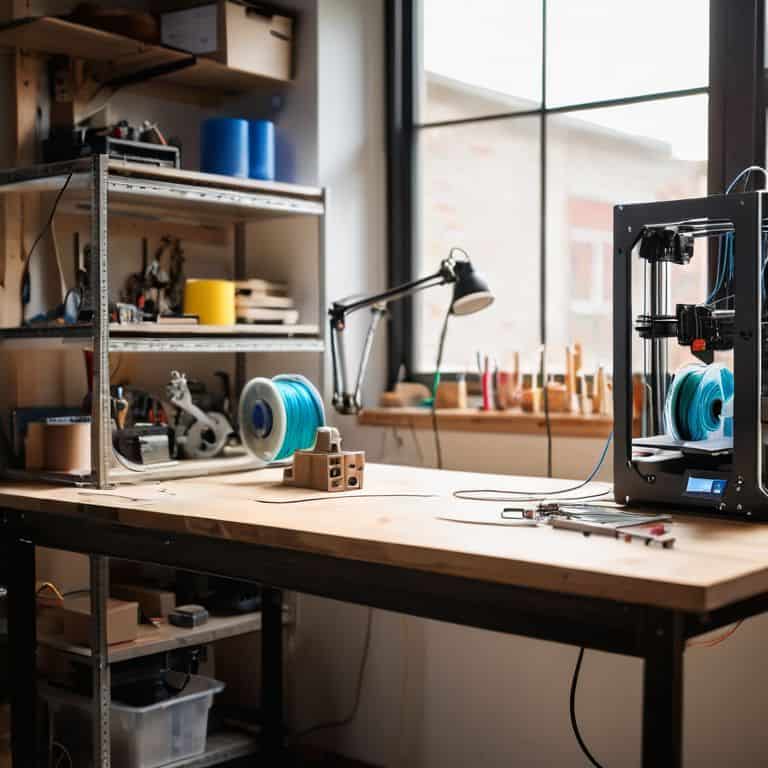
As I sat in my makeshift virtual reality lab, surrounded by half-assembled 3D printers and spools of colorful filament, I realized that a guide to 3d printing filament types was long overdue. The common myth that 3D printing is only for tech-savvy enthusiasts is not only frustrating but also far from the truth. With the right materials and a bit of patience, anyone can create incredible objects that seem to defy gravity. I’ve spent countless hours exploring the galactic expanse of 3D printing, and I’m excited to share my knowledge with you.
In this article, I promise to provide you with honest and practical advice on navigating the complex world of 3D printing filaments. You’ll learn about the different types of materials, their unique properties, and how to choose the right one for your project. Whether you’re a seasoned maker or just starting out, this guide will help you unlock the full potential of 3D printing and bring your most out-of-this-world ideas to life. So, buckle up and get ready to blast off into the amazing world of 3D printing filament types – I’m thrilled to be your guide on this journey!
Table of Contents
- Guide Overview: What You'll Need
- Step-by-Step Instructions
- Stellar Filament Guide
- Navigating the Nebula: 5 Essential Tips for Choosing the Right 3D Printing Filament
- Nebula Notes: 3 Key Takeaways
- Navigating the Cosmos of 3D Printing
- Reaching for the Stars: A Cosmic Conclusion
- Frequently Asked Questions
Guide Overview: What You'll Need
Total Time: 1 hour 30 minutes
Estimated Cost: $20 – $100
Difficulty Level: Intermediate
Tools Required
- 3D Printer (with temperature control)
- Filament Measuring Device (e.g., caliper or ruler)
- Computer (with 3D printing software)
Supplies & Materials
- PLA Filament (polylactic acid, biodegradable)
- ABS Filament (acrylonitrile butadiene styrene, impact resistant)
- PETG Filament (polyethylene terephthalate glycol, strong and flexible)
- Nylon Filament (strong, abrasion resistant, and flexible)
- Metal Filled Filament (e.g., bronze, aluminum, or steel filled, for heavy duty prints)
Step-by-Step Instructions
- 1. First, let’s dive into the world of 3D printing filament types by understanding the basics of thermal properties, which play a crucial role in determining the suitability of a filament for a specific project. This involves considering factors like melting point, glass transition temperature, and thermal conductivity to ensure that your chosen filament can withstand the printing process and the intended use of the final product.
- 2. Next, we need to explore the mechanical properties of different filaments, including tensile strength, flexural strength, and impact resistance. This step is essential for selecting a filament that can meet the performance requirements of your project, whether it’s a durable prototype, a functional part, or a delicate model. By understanding the mechanical properties of various filaments, you can make informed decisions about which material to use for your specific application.
- 3. Now, let’s examine the options for 3D printing filaments, starting with the most common types: PLA, ABS, and PETG. Each of these filaments has its own unique characteristics, advantages, and disadvantages. For instance, PLA is a biodegradable and plant-based filament, making it an environmentally friendly choice, while ABS is a strong and impact-resistant filament, often used for creating durable parts. Understanding the differences between these filaments will help you choose the best one for your project.
- 4. Moving on to more advanced filaments, we have materials like nylon, polycarbonate, and metal-filled filaments. These high-performance materials offer enhanced mechanical properties, such as increased strength, stiffness, and thermal resistance. However, they often require specialized printing equipment and techniques, so it’s essential to assess your printer’s capabilities and your own expertise before working with these filaments.
- 5. Another critical step is to consider the aesthetics of your project, as different filaments can produce distinct visual effects. For example, some filaments are available in a range of vibrant colors, while others can be metallic or translucent. You may also want to experiment with post-processing techniques, such as sanding or painting, to achieve a specific finish or texture. By thinking about the visual aspects of your project, you can select a filament that not only meets the functional requirements but also enhances the overall appearance of your creation.
- 6. Before making a final decision, it’s essential to evaluate the compatibility of your chosen filament with your 3D printer. This involves checking the diameter and material composition of the filament to ensure that it matches your printer’s specifications. You should also consider factors like print speed, temperature, and layer thickness to optimize the printing process and achieve the best possible results.
- 7. Finally, let’s talk about safety precautions when working with 3D printing filaments. It’s crucial to handle filaments in a well-ventilated area and follow proper safety protocols when printing, as some materials can release harmful fumes or particles. By taking necessary precautions and being mindful of potential hazards, you can enjoy a safe and successful 3D printing experience.
Stellar Filament Guide

As I delve into the cosmic expanse of 3D printing filaments, I’ve come to realize that filament properties comparison is crucial for achieving the desired results. When selecting a filament, it’s essential to consider factors such as durability, flexibility, and thermal resistance. For instance, if you’re planning to create a model of a spaceship, you’ll want to choose a filament that can withstand high temperatures and maintain its structural integrity.
In my experience, 3D printing temperature settings play a significant role in determining the quality of the final product. Different filaments have optimal temperature ranges, and failing to adhere to these guidelines can result in warped or brittle prints. To avoid such issues, I always make sure to calibrate my 3D printer according to the manufacturer’s instructions and the specific filament being used. This attention to detail has saved me from countless hours of frustration and has enabled me to produce prints that are truly out of this world.
When it comes to 3D printing cost calculation, it’s essential to consider the cost of the filament, as well as the time and energy required to produce the print. By choosing the right filament and optimizing my printing settings, I’ve been able to reduce waste and minimize costs. Additionally, I’ve developed a few filament storage and handling tips that have helped me maintain the quality of my filaments and prevent degradation over time.
Cosmic Threads Material Selection
As I delve into the vast expanse of 3D printing filaments, I find myself drawn to the unique properties of each material, much like a stargazer navigating the night sky. From the durability of PETG to the versatility of PLA, each filament type is like a distinct constellation, waiting to be explored and understood. My latest project, “Nebula’s Edge,” relies heavily on the subtle sheen of metallic-infused filaments, which add an otherworldly glow to the digital landscapes I create.
In “Cosmic Threads,” I’ve come to realize that material selection is an art form, where the right choice can elevate a design from mundane to mesmerizing. I’ve named this section of my guide after the constellation “Rigel,” a shining star in the Orion constellation, symbolizing the illumination that comes from understanding the intricacies of 3D printing materials.
Galactic Properties Filament Comparison
As I delve into the vast expanse of filament types, I find myself drawn to the unique properties of each, much like the distinct characteristics of celestial bodies. PLA, with its low thermal expansion, is akin to a stable, long-lived star, while ABS, with its higher impact resistance, resembles a resilient, rocky planet. PETG, on the other hand, shines like a versatile, glowing nebula, offering a balance of strength and flexibility.
In comparing these filament types, I consider factors like tensile strength, melting point, and layer adhesion, weighing the pros and cons of each to determine the best fit for my virtual reality projects. This careful consideration allows me to craft immersive experiences that are as sturdy as a spaceship’s hull or as delicate as a lunar landscape. By understanding the galactic properties of each filament, I can push the boundaries of what’s possible in my digital universes.
Navigating the Nebula: 5 Essential Tips for Choosing the Right 3D Printing Filament
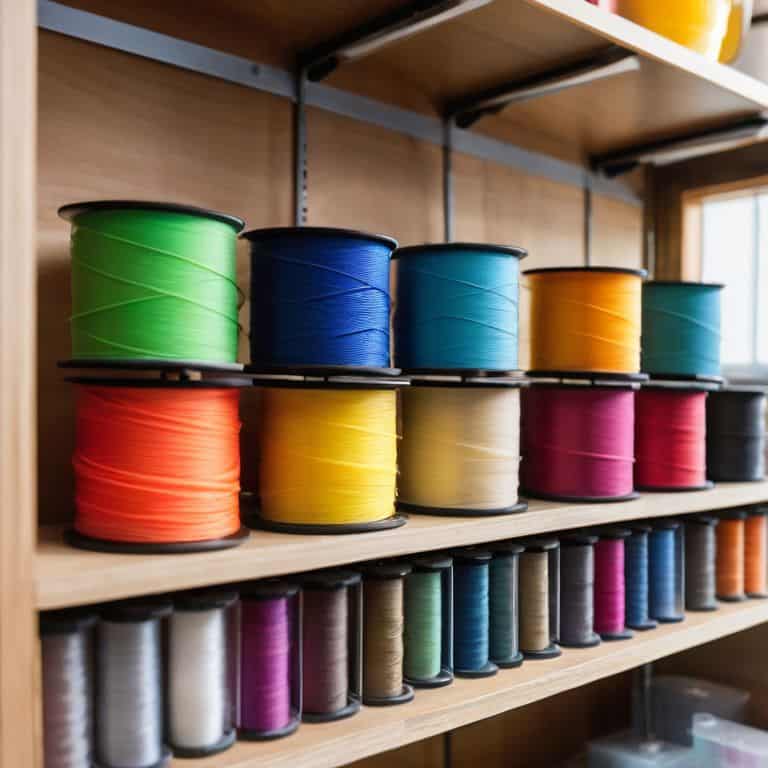
- Start with the basics: Understand the fundamental differences between PLA, ABS, and PETG filaments to determine which one suits your project’s needs
- Consider the cosmic conditions: Take into account the temperature, humidity, and lighting in your printing environment to ensure optimal results
- Thread with care: Choose filaments with compatible melting points and thermal expansion properties to prevent warping or cracking
- Explore the galaxy of blends: Mix and match different filament types to create unique properties, such as wood-infused or metal-filled filaments
- Chart your course: Keep a record of your filament experiments, noting successes and failures, to refine your selection process and become a master navigator of the 3D printing universe
Nebula Notes: 3 Key Takeaways
Embracing the vast universe of 3D printing filaments requires a deep understanding of their unique properties, from the flexibility of TPU to the strength of PETG, each with its own set of applications and challenges
By navigating the galactic expanse of filament types, such as PLA, ABS, and nylon, creators can unlock new dimensions in their projects, whether it’s crafting durable tools or designing intricate, cosmically-inspired art pieces
Ultimately, mastering the art of filament selection is akin to charting a course through the stars – it demands a blend of technical knowledge, creative vision, and a willingness to explore and innovate, pushing the boundaries of what’s possible in the realm of 3D printing
Navigating the Cosmos of 3D Printing
As we venture into the vast expanse of 3D printing filament types, remember that the right material is not just a medium, but a gateway to unlocking the infinite possibilities of your creations, where the boundaries of reality are stretched and the stars of innovation are born.
Roy Barratt
Reaching for the Stars: A Cosmic Conclusion
As we conclude our journey through the galactic expanse of 3D printing filament types, it’s essential to recall the key principles that guide our material selection. From the cosmic threads of PLA and ABS to the galactic properties of PETG and nylon, each filament type offers a unique set of characteristics that can make or break our printing projects. By understanding the strengths and weaknesses of each material, we can unlock new possibilities for innovation and creativity in the world of 3D printing.
As we blast off into the unknown, remember that the true power of 3D printing lies not in the technology itself, but in the boundless imagination of its users. So, don’t be afraid to experiment, to push the limits of what’s possible, and to reach for the stars with your next printing project. Whether you’re a seasoned astronaut or just starting your cosmic journey, the world of 3D printing filament types is full of endless possibilities and waiting to be explored.
Frequently Asked Questions
What are the most common issues that can occur when using different types of 3D printing filaments and how can they be resolved?
Ah, the dark matter of 3D printing – issues that can arise when working with different filaments! Common problems include warping, layer shifting, and clogs. To resolve these, try adjusting temperatures, using adhesives, and maintaining a clean nozzle. For instance, ABS filaments often require higher temps, while PLA benefits from a well-ventilated workspace. Troubleshooting is an art, and with practice, you’ll be navigating these challenges like a space pro!
How do environmental factors such as temperature and humidity affect the quality and durability of 3D printed objects using various filament types?
As I’ve navigated the virtual cosmos, I’ve found that environmental factors like temperature and humidity can significantly impact 3D printed objects. For instance, high humidity can cause ABS filaments to warp, while extreme temperatures can affect PLA’s layer adhesion, leading to brittle prints – a phenomenon I’ve observed in my ‘Rigel’ project, where I simulated Martian environments.
Can you recommend any specific 3D printing filament brands or products that are known for their high quality and consistency?
I swear by the stars of the constellation Rigel, my go-to filaments are from Prusa and MatterHackers – their quality and consistency are out of this world, making them perfect for crafting intricate, otherworldly designs in my VR projects, like the Andromeda Galaxy simulator I’m currently building.
